

How To Season A Cast Iron Skillet Correctly
Pre-seasoned skillets (like most Lodge pans) save time out of the box and are great for cooks who want to use the pan immediately. Raw/unseasoned cast iron gives you a blank slate and often a smoother surface, but it requires multiple seasoning cycles to build a dependable layer. If you plan to aggressively develop a black, nonstick surface, buy raw or plan on re-seasoning pre-seasoned pans a few times.
Table of Contents
Our Top Picks
Affiliate disclosure: if you buy through these links, we may earn a commission at no extra cost to you.


Factors to Consider
Choose raw vs. pre-seasoned — know what you’re actually buying
Pick the right oil — smoke point and polymerization matter
Use an oil with a high smoke point and a tendency to polymerize into hard film: grapeseed, sunflower, refined avocado, canola, or even vegetable shortening. Don’t get fooled by flaxseed hype — it can produce a hard-looking layer that flakes if not applied perfectly. Avoid olive oil and butter as primary seasoning oils because their low smoke points break down and leave sticky residues.
Method and oven requirements — size, temperature, and ventilation
The oven method (upside-down at 450–500°F for 45–60 minutes) is the most reliable for even polymerization; you’ll need an oven that reaches those temps and space for the pan plus a drip tray. Stovetop seasoning works for spot fixes but won’t give the same even coat and risks uneven polymerization. If your kitchen has poor ventilation, crank a window or use a vent fan — oil at high temperatures will smoke.
Surface prep — rust, pitting, and smoothing the cooking surface
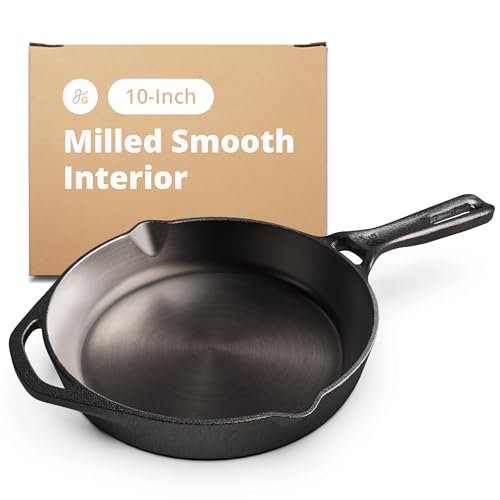
Address rust and pitting before seasoning: use steel wool or a wire brush down to bare metal, then clean with hot water and dry thoroughly. For a smoother finish, polish with fine sandpaper or use the smoother factory-face of higher-end pans — smooth surfaces season more consistently and release food better. Never use detergent to strip pan unless you plan to fully re-season; light soap is OK to remove oils after use.
Maintenance strategy — cleaning, touch-ups, and storage
Plan to wipe with a thin oil layer after each clean to maintain the seasoning and prevent rust; a quick hot-water scrub and towel-dry is usually enough. Do a full re-seasoning cycle whenever you see persistent stickiness, dullness, or rust—this is normal wear, not a defect. Store with a paper towel between lids or nested pans to absorb moisture and avoid scratches that compromise the seasoning.
Frequently Asked Questions
How often should I season my cast iron skillet?
If you cook on it daily, a light oil wipe after each use and an oven seasoning once every 2–3 months is usually enough. For occasional use, re-season whenever food starts to stick or the surface looks dull or rusty. Frequent light maintenance prevents the need for full rebuilds.
What oil is best for seasoning a cast iron pan?
Use a high-smoke-point oil that polymerizes well: grapeseed, refined avocado, sunflower, canola, or vegetable shortening are solid choices. Skip extra-virgin olive oil and butter for the actual seasoning step—their low smoke points mean sticky residue instead of a hard, durable layer. Flaxseed oil is popular online but easy to mess up and can flake if not applied in ultra-thin, perfectly baked layers.
What temperature and time should I use to season?
Set your oven to 450–500°F (230–260°C) and bake the pan upside-down for 45–60 minutes per layer, then cool in the oven. That range lets the oil reach polymerization without breaking down into sticky deposits. Repeat 2–4 thin layers for a reliable, blackened surface.
Can I season a skillet on the stovetop?
Stovetop seasoning can work for spot repairs but won’t give the even, hard coating the oven method produces. It’s useful for immediate fixes or for creating a thin top layer after oven seasoning, but expect uneven coloration and more hands-on attention. For best long-term performance, use the oven method as your baseline.
My skillet is sticky after seasoning—what happened and how do I fix it?
Sticky residue usually means the oil was applied too thickly or the temperature/time were insufficient for full polymerization. Strip the sticky layer with hot water and a scrub or a quick oven bake at a slightly higher temp to burn off the excess, then reseason with much thinner coats—wipe off most oil so only a sheen remains before baking.
Are acidic foods like tomatoes safe to cook in cast iron?
Slightly acidic foods are fine in a well-seasoned pan for short cooks, but prolonged simmering can break down the seasoning and leave metallic flavors. If you want to cook long tomato sauces, use a well-established, dark seasoning or choose an enameled pan to avoid flavor transfer and seasoning damage. After acidic cooks, reapply a thin coat of oil while the pan is warm.
Is commercial seasoning spray or “instant” coating worth it?
Most instant sprays and consumer “seasoned” fixes are temporary and don’t bake into the pan like proper polymerized oil; they can help cosmetically but won’t replace a real seasoning build. Use them for quick touch-ups, but rely on oven-baked oil layers for long-term performance. Don’t fall for marketing that promises a lifetime nonstick from a single spray—seasoning is maintenance, not a one-time miracle.
Conclusion
Seasoning cast iron correctly is simple but unforgiving: thin coats, high heat, and patience beat gimmicks every time. For most cooks the best value and easiest results come from a solid, pre-seasoned Lodge skillet that you reinforce with 2–3 oven seasoning cycles; Winner: Lodge 10.25" skillet. Runner-up: Field Company (lighter, smoother finish) if you want a higher-end pan that seasons up faster but costs more.


