

How To Choose The Right Digital Kitchen Scales 2026
Stop guessing. If you are eyeballing a cup of flour or estimating the weight of your sous vide protein, you are cooking on luck, not precision. A digital kitchen scale is the single most underrated tool in a modern kitchen, bridging the gap between amateur cooking and consistent, restaurant-quality results. It doesn't matter if you are dialing in the hydration for sourdough, portioning macros for meal prep, or extracting the perfect espresso shot; weight is the only metric that doesn't lie. This guide cuts through the marketing fluff to tell you exactly what features actually matter and what is just plastic waste waiting for the landfill.
Our Top Picks
Affiliate disclosure: if you buy through these links, we may earn a commission at no extra cost to you.

Table of Contents

Quick Answer
Choose a scale with a minimum 5kg (11lb) capacity and 1g precision for general cooking, or 0.1g precision if you are doing espresso or baking. Prioritize a flat, waterproof platform for easy cleaning and a tare function that actually works instantly. Avoid cheap, flimsy models that drift in calibration; spend $20-$40 for a unit that will last a decade, not a season.
Precision vs. Capacity: The Core Trade-off
Most consumers make the mistake of looking at the price tag before looking at the specs. The two most critical numbers on any scale are its maximum capacity and its readability (precision). These two often work in opposition. A scale designed to weigh a whole turkey will struggle to measure a single gram of yeast. Conversely, a scale designed for gold or espresso will break if you put a cast-iron skillet on it.
For general kitchen tasks—weighing chicken for the air fryer, measuring flour for an Instant Pot rice cooker, or portioning ground beef for a food processor—you need a scale with a 5kg (11lb) capacity and 1g readability. This is the sweet spot. It handles heavy pots and precise ingredients without breaking the bank. If you are doing serious baking, stick to 1g. If you are weighing produce or meats, 1g is still sufficient, though 5g readability is acceptable for rough estimates.
Do not buy a scale with 0.1g precision unless you have a specific use case. That level of sensitivity is prone to "drift" caused by air currents, vibration from a nearby blender, or even your own breathing. It is overkill for 95% of home cooks and introduces unnecessary frustration.
The Platform Matters: Size, Material, and Cleaning
The platform is where the rubber meets the road. A tiny, circular platform is useless if you are weighing a large bowl of dough or a wide Instant Pot insert. Look for a rectangular or large square platform that can accommodate standard mixing bowls without the edges overhanging. Overhanging bowls throw off the center of gravity and result in inaccurate weights.
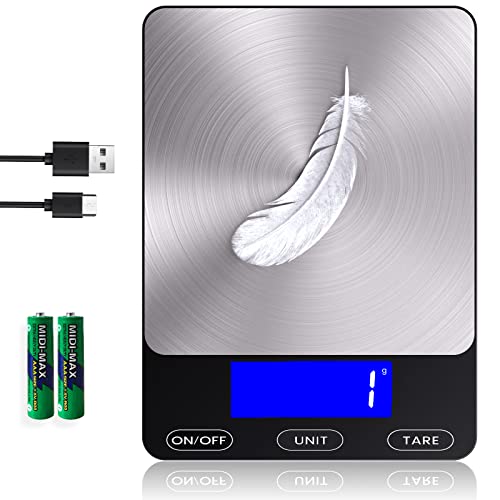
Material is equally important. Stainless steel is the gold standard. It is durable, hygienic, and easy to wipe down. Plastic platforms are cheaper but scratch easily, harbor bacteria in micro-abrasions, and can warp over time under heavy loads. Glass is aesthetically pleasing but slippery and prone to shattering if a heavy ceramic bowl is dropped on it.
Cleaning is the silent killer of kitchen gadgets. If a scale has seams, buttons, or a textured surface where food can get trapped, it will become a magnet for mold and grime. The best scales have a seamless, waterproof design. You should be able to wipe it down with a damp cloth or even run it under the tap (if rated IPX7) without fear of damaging the electronics.
Power Sources and Battery Drains
There is nothing more annoying than reaching for your scale to weigh ingredients for a coffee pour-over, only to find the display is dead. Battery life and power source type are often overlooked until it is too late.
Most mid-range scales use AAA or CR2032 coin cell batteries. Coin cells last a long time but are annoying to replace if you don't keep spares. AAA batteries are easier to find but drain faster. Avoid scales that require proprietary charging cables unless they have a massive internal battery. A scale with a USB-C charging port is a modern convenience that ensures you never run out of power at an inconvenient moment.
Look for auto-off features, but ensure they are adjustable or can be disabled. Some scales turn off after 60 seconds, which is too fast if you are slowly adding ingredients to a sous vide bag. A 2-5 minute auto-off is the industry standard for efficiency without frustration.
Specialized Needs: Espresso vs. General Cooking
While a general-purpose scale works for most tasks, specific appliances demand specialized tools. If you are an espresso enthusiast using a high-end coffee maker, a standard 1g-precision scale is insufficient. You need 0.1g precision to dial in your grind dose and track your yield (the ratio of dry coffee to liquid espresso). These scales often have a "pulsed" mode to capture peak weight during the shot.
Similarly, if you are using a food processor for large batches of dough or weighing heavy cast iron for a countertop oven, ensure the scale's capacity is at least 10kg (22lb). Standard 5kg scales will overload and display an error (usually "OL" or "Err") when you try to weigh a heavy dutch oven, rendering them useless for your primary task.
Do not buy a dedicated espresso scale for general cooking. They are too fragile, too small, and too sensitive for everyday kitchen chaos. Buy one general-purpose scale for 90% of your needs, and a specialized one only if you are serious about that specific hobby.
Durability and Build Quality
Kitchen appliances take a beating. Ingredients spill, bowls are dropped, and surfaces get hot. A cheap plastic scale will crack under the weight of a heavy cast-iron skillet or shatter if it slips off the counter. Look for a scale with a solid, rigid frame. The display unit should be firmly attached to the platform, not wobbly or loose.
Check the warranty. A reputable brand will offer at least a 1-year warranty. If a company offers no warranty or a 30-day "satisfaction guarantee" only, assume the product is disposable. A good scale is an investment that should last 5-10 years. Read reviews specifically mentioning long-term use. If users report calibration drift after 6 months, walk away.
Finally, consider the footprint. Your counter space is limited. A bulky, oversized scale will clutter your workspace. Look for a slim profile that can be easily stored in a drawer or tucked behind other appliances. However, do not sacrifice platform size for portability. A scale that is too small to hold a standard bowl is worse than useless; it is a waste of money.
Frequently Asked Questions
Can I use a kitchen scale to weigh liquids?
Yes. Place your empty container on the scale, press the "Tare" or "Zero" button to subtract the container's weight, and then pour in your liquid. The display will show only the weight of the liquid. This is more accurate than volume measurements for ingredients like honey or oil.
Why does my scale give different weights each time?
This is usually caused by an uneven surface, low batteries, or calibration drift. Ensure the scale is on a hard, flat surface. Replace batteries if they are old. If the problem persists, check if your scale has a calibration function (often accessed by holding a specific button) and recalibrate it according to the manual.
Do I need a scale with unit conversion?
It is helpful but not essential. Most scales switch between grams, ounces, pounds, and milliliters. If you frequently cook with international recipes, a scale with easy unit conversion is a significant quality-of-life improvement. However, you can always use online converters if your scale lacks this feature.
Is a glass scale better than stainless steel?
No. Stainless steel is more durable, hygienic, and resistant to scratching. Glass scales are aesthetically pleasing but prone to shattering and can be slippery. For a high-traffic kitchen, stainless steel is the superior choice.
Can I put a kitchen scale in the dishwasher?
Never put the electronic display unit in the dishwasher. Even if the platform is removable, the electronics are vulnerable to water damage. Wipe the platform with a damp cloth and mild soap. If your scale is rated IPX7, you can rinse the entire unit under a tap, but never submerge it or put it in a dishwasher.
Choosing the right digital kitchen scale comes down to matching the specs to your actual cooking habits. Don't get distracted by flashy designs or unnecessary features. Focus on precision, capacity, and build quality. A reliable scale will transform your cooking from a guessing game into a precise science, saving you time, money, and frustration in the long run. Invest in a solid, stainless steel model with 1g precision, and you will wonder how you ever cooked without it.


