

Nesco Food Dehydrators Vs Excalibur Food
If you’ve ever spent a weekend prepping a massive batch of beef jerky only to find half the trays are dried out and the other half are still tacky, you know that not all dehydrators are created to the same standard. When you're looking at Nesco versus Excalibur, you aren't just comparing brands; you are choosing between two fundamentally different engineering philosophies: vertical stacking versus horizontal airflow. One is built for expandable, budget-friendly capacity, while the other is built for professional-grade consistency.
This comparison is for the serious home cook, the seasonal harvester, and the jerky enthusiast who is tired of fighting with uneven heat. We are stripping away the marketing fluff to look at how these machines actually perform in a real kitchen. Whether you need a compact tower that grows with your needs or a heavy-duty workhorse to process a full harvest, this guide will tell you exactly which investment is worth your hard-earned money in 2026.
Affiliate disclosure: if you buy through these links, we may earn a commission at no extra cost to you.
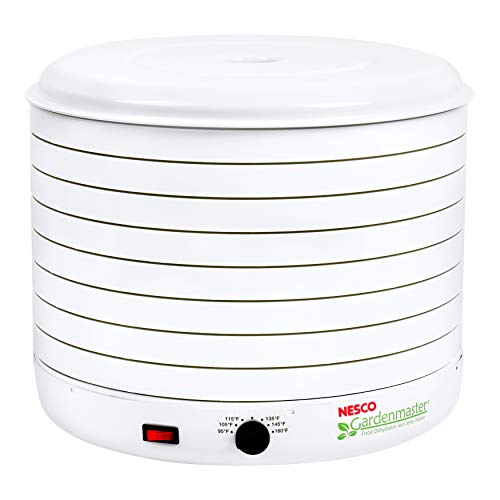

Table of Contents
- Models in this comparison
- Quick Verdict
- About Nesco Food Dehydrators
- About Excalibur Food Dehydrators
- Design Layout and Airflow
- Capacity and Drying Space
- Ease of Use and Maintenance
- Who Should Choose Nesco Food Dehydrators?
- Who Should Choose Excalibur Food Dehydrators?
- Our Verdict
- Frequently Asked Questions
- Sources & References
Models in this comparison
Affiliate disclosure: if you buy through these links, we may earn a commission at no extra cost to you.

Quick Verdict
Choose Nesco Food Dehydrators if...
- You want a budget-friendly entry point ($60-$80) to start your preservation journey.
- You need expandable capacity, as the vertical stacking design allows you to add more trays as needed.
- You prefer a compact footprint that can grow with your needs rather than taking up massive counter space immediately.
Choose Excalibur Food Dehydrators if...
- You are a serious jerky maker or homesteader dealing with high-volume harvests.
- You want even, consistent drying without the hassle of rotating trays mid-cycle.
- You prioritize professional-grade horizontal airflow and maximum drying surface area in a single load.
| Factor | Nesco Food Dehydrators | Excalibur Food Dehydrators |
|---|---|---|
| Primary Design | Vertical stacking (round trays) | Horizontal airflow (box design) |
| Relative Cost | $60–$80 (Budget-friendly) | $329–$399 (Premium/Enthusiast) |
| Best For | Small starts with expandable capacity | High-volume jerky and harvest preservation |
| Drying Method | Vertical airflow; requires tray rotation for evenness | Rear horizontal fan; even drying without rotation |
| Key Advantage | Massive expandable capacity (up to 30 trays) | Professional-grade precision and 15 sq. ft. of space |
| Main Drawback | Uneven heating; can be loud (70-75 dB) | Higher entry price and larger footprint |
About Nesco Food Dehydrators
Nesco is the go-to for those who want a low entry price and the ability to scale up as their needs grow. Most Nesco models, like the FD-75A, utilize a vertical stacking design where round trays are layered in a tower. This design is highly expandable; for instance, the FD-75A can be expanded up to 30 trays, making it a versatile option for seasonal drying. With a 600W power rating and a temperature range of 95-160°F, these machines provide enough muscle for fruit, vegetables, and jerky.
However, the vertical airflow design comes with trade-offs. Because the air moves vertically through the stack, heating can be uneven from side to side. To get consistent results, you often need to rotate the trays mid-cycle. While the Nesco is a reliable workhorse with a 35-year market track record, the plastic housing can crack with age, and the noise level (around 70-75 dB) is higher than premium countertop models. It is a budget-friendly, expandable solution for those who don't mind a little manual shuffling to get the perfect dry.
About Excalibur Food Dehydrators
Excalibur represents the "enthusiast" tier of dehydration. Models like the Excalibur 3926TB are built for high-volume tasks, such as processing a large harvest or a heavy batch of jerky. The 3926TB provides 15 square feet of drying space across 9 trays. Unlike the vertical stacking of Nesco, Excalibur uses a rear horizontal fan design. This horizontal airflow ensures that heat is distributed evenly across every tray, meaning you don't have to waste time rotating trays to prevent uneven drying.
This is a professional-grade approach to food preservation. With an adjustable thermostat (105 to 165°F) and a 26-hour timer, the Excalibur is designed for precision. It is the superior choice for serious jerky makers and those who need consistent, heavy-duty performance without the fuss of manual tray management. While it requires more counter space than a vertical stacker, the trade-off is a much more consistent drying environment for large-scale food preservation.
Design Layout and Airflow
The most fundamental difference between these two brands is how they move air. Nesco uses a vertical stacking design with round trays that own a much smaller footprint but rely on vertical airflow. Because the heat moves up through the tower, you often have to rotate trays mid-cycle to ensure even drying. This is a "stacker" design meant for those who want to start small and expand their capacity as needed.
Excalibur, specifically the 3926TB model, uses a horizontal airflow design with a rear-mounted fan. This pushes air across the trays from one side to the other, which provides much more even drying without the need to shuffle trays around. While the Nesco is more expandable (with some models reaching up to 30 trays), the Excalibur offers a more consistent, professional-grade drying environment for serious users.
Capacity and Drying Space
When comparing capacity, you are choosing between vertical volume and horizontal surface area. The Nesco FD-75A is built for high-volume stacking, offering 12 round trays that can be expanded to 30. This makes it a powerhouse for those who want to use every inch of vertical space in a kitchen. However, because the trays are round, you are limited by the diameter of the unit rather than the sheer square footage of the food surface.
The Excalibur 3926TB is the heavy hitter for surface area, providing 15 square feet of drying space across 9 trays. For tasks like jerky making or drying large batches of fruit, the horizontal layout of the Excalibur allows you to spread food out more effectively. While Nesco wins on sheer tray count and expandability, Excalibur wins on usable, even drying surface area.
Ease of Use and Maintenance
Nesco models like the FD-75A are built as budget-friendly workhorses. They are straightforward, often using manual knobs rather than complex digital interfaces. This simplicity makes them easy to operate, but the plastic housing and the need to rotate trays mean they require more manual intervention to get perfect results. They are built to last—with a 35-year market track record—but they aren't "set it and forget it" machines.
Excalibur is designed for the enthusiast who wants precision. The 3926TB features an adjustable thermostat (105 to 165°F) and a 26-hour timer with automatic shut-off. The horizontal design means you don't have to worry about the unevenness found in vertical stackers. While the Excalibur is a more significant investment, it is designed to minimize the "fuss" of manual tray management, making it the more efficient choice for consistent, repeatable results.
Who Should Choose Nesco Food Dehydrators?
The Nesco is the choice for the budget-conscious user who wants a versatile, expandable workhorse. Because it uses a vertical stacking design with round trays, it offers a much lower entry price—typically between $60 and $80 for models like the FD-75A—making it an easy win for beginners or those testing the waters of food preservation.
- The Space-Savers: If you have limited counter footprint but want the ability to scale up, the vertical design is ideal. You can start with a few trays and expand up to 30 as your needs grow.
- The Budget Builders: For those who want a machine with a long track record (35 years of market presence) without breaking the bank, Nesco provides reliable drying power.
- The "Small Batch" Users: If you aren't drying massive harvests but need a reliable way to make seasonal fruit leathers or herbs, the Nesco is a practical, low-risk investment.
Note: If you choose Nesco, be prepared to rotate your trays mid-cycle to account for the vertical airflow, and keep an eye on the plastic housing as it ages.
Who Should Choose Excalibur Food Dehydrators?
The Excalibur is for the serious enthusiast, the hunter, and the heavy-duty homesteader. This is not a "gadget"; it is a production machine. While the price point is higher (typically $329-$399 for models like the 3926TB), you are paying for professional-grade consistency and massive capacity.
- The Jerky Specialists: If your primary goal is meat, the Excalibur is the gold standard. Its rear horizontal fan design ensures even drying across all trays without the need for manual rotation, which is critical for food safety and texture consistency.
- The High-Volume Producers: With 15 square feet of drying space across 9 trays, the Excalibur is built for those who need to process large harvests or bulk meat orders in a single run.
- The Precision Seekers: For users who demand precise temperature control and a robust, commercial-grade build that can withstand years of heavy use, the Excalibur is the clear winner.
Note: Choose Excalibur if you prioritize even heat distribution and "set it and forget it" reliability over the lowest possible price.
Our Verdict
Choosing between Nesco and Excalibur isn't about which machine is "better"—it's about whether you are a casual snacker or a serious food preserver. These two brands serve entirely different workflows, and buying the wrong one will result in a bulky machine gathering dust or a capacity bottleneck that frustrates your harvest.
If you want a budget-friendly, expandable tower that grows with your needs, Nesco is the winner. Its vertical stacking design is perfect for those who want to start small and add trays as needed. However, because the airflow is vertical, you'll need to rotate trays to ensure even drying. It is the "workhorse" for those who want a low entry price and a machine that can be tucked into a corner when not in use.
If you are a serious jerky maker, hunter, or homesteader, Excalibur is the clear choice. The 3926TB's horizontal airflow design is the gold standard for a reason: it provides 15 square feet of drying space and ensures even results without the constant need to shuffle trays. It is a professional-grade tool designed for volume and precision.
The Winner: Excalibur 3926TB
For anyone serious about food preservation, the Excalibur is the superior investment. The horizontal airflow design eliminates the guesswork of uneven drying, making it much more reliable for critical tasks like meat jerky. It is built for heavy-duty, consistent performance.
The Runner-Up: Nesco FD-75A / Snackmaster Series
Nesco is the best value for the casual user. It offers massive expandable capacity and a much lower price point, making it the perfect "entry-level" machine for fruit leathers and herbs, provided you don't mind the manual task of rotating trays.
Frequently Asked Questions
What is the main difference between Nesco and Excalibur designs?
The difference is airflow layout. Nesco uses a vertical stacking design where air moves through a tower of round trays. Excalibur uses a horizontal box design with a rear fan that pushes air across trays. Nesco offers expandable capacity at a lower entry point, while Excalibur offers more even drying with less tray rotation needed.
How do I safely make beef jerky in a dehydrator?
Safety is about the "kill step." According to the USDA FSIS, you should bring meat to an internal temperature of 160°F and poultry to 165°F before starting the dehydration process. Applying heat to the meat while it is still moist ensures bacteria are vulnerable before the drying process begins.
Is a higher wattage better for food dehydration?
Wattage matters based on what you are drying. For vegetables and fruit, a minimum of 300W is required. For jerky and meat, 400W or higher is recommended. Both Nesco and Excalibur models typically hit the 600W sweet spot, making them suitable for serious food preservation.
Can I expand my Nesco dehydrator capacity?
Yes. The Nesco FD-75A features a vertical stacking design with 12 round trays that are expandable up to 30 trays, allowing you to increase capacity as needed.


